Padua in a day: the chapel, the two museums already on your ticket, and what is worth the walk after
The chapel takes fifteen minutes. That leaves a day, and Padua is a good city to be left with: flat, small, arcaded for much of its length, and old in a way that keeps turning up at the end of streets. Here is what to do with the other seven hours.
The two museums most visitors walk straight past
This is the single most wasted thing in Padua. The ticket that gets you into the chapel also opens the Eremitani Museum — archaeology, medieval and modern art — and Palazzo Zuckermann, on every day except Monday. You collect your chapel ticket at the museum entrance, walk through to the chapel for your quarter of an hour, and then most people leave. Two reviewers who did not leave say what they found. Christine: “consider spending a significant amount of time in the museum, which is huge and truly remarkable.” Aisha: “The attached museum is also a fantastic experience as well.”
If you are visiting on a Monday, this part of the ticket is simply not available, and it is worth choosing a different day for that reason alone (slots, and the Monday problem).
Is Padua walkable? Yes, and unusually so
The distances are small and the city is flat, which is the short version. The longer version is the arcades: a great deal of central Padua is covered pavement, so the walk from the chapel to the Basilica is doable in rain and survivable in August, which is not true of every Italian city that claims to be walkable. From the Giardini dell’Arena you can reach Piazza delle Erbe, the Palazzo della Ragione, the university, the Basilica and Prato della Valle on foot in a loop, in a single afternoon, without repeating yourself.
The four things to do after the chapel
The Basilica of St Anthony. This answers the question a lot of people arrive with: yes, St Anthony is buried in Padua, and his bones rest in a chapel inside the Basilica, richly ornamented in carved marble. It is a working pilgrimage church rather than a museum, it is free to enter, and the crowd is a different crowd from the chapel’s. One of our thirteen listings is built entirely around him and his life, and states on its own page that the chapel ticket is separate (what that tour is).
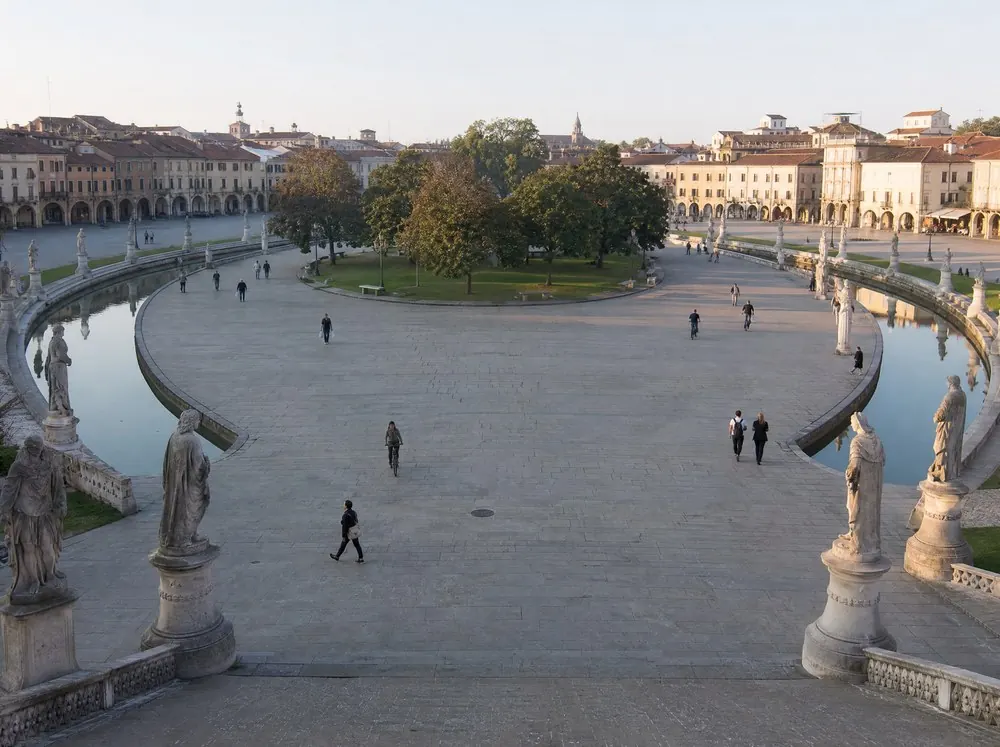
Prato della Valle. An elliptical square of 90,000 m² with a moated island in the middle and a ring of statues round it, and one of the biggest squares in Europe. It is five minutes from the Basilica and it is where Padua goes on a Saturday.
The Palazzo della Ragione. The medieval law courts, whose great hall is 81.5 metres long, 27 wide and 24 high, and is said to have the largest roof in Europe unsupported by columns. It sits between two market squares that have been markets for eight hundred years. One reviewer of the city walk wanted the tour lengthened specifically to get inside it: “I would suggest adding half an hour more to at least enter the palace of reason with the guide”.
The university and the botanical garden. The University of Padua was founded in 1222, and Galileo held its chair of mathematics from 1592 to 1610; the Orto Botanico was established in 1545 and is described as the oldest botanical garden in the world. Both are ordinary working institutions that happen to be that old, which is a very Paduan combination.
If you only have half a day and a chapel slot in it, do the two museums on your ticket and the Palazzo della Ragione, and leave the Basilica for a return visit. The Basilica deserves more than the hour you would give it.
The honest note about doing this out of Venice
Two of the thirteen listings we track are day trips from Venice rather than tours of Padua, and they are a different proposition from everything else here. One runs six and a half hours with lunch and includes chapel admission, with its own page adding that admission “is subject to availability”. The other runs six hours with a car and a driver-guide, and the chapel is not in its inclusions at all: its page says art lovers “can opt for a visit to the Scrovegni Chapel”, which means the booking is yours to make on a day you have already committed to somebody else’s vehicle.
Padua is about forty kilometres from Venice and the fast trains take around half an hour, so doing it independently is genuinely easy — provided the chapel slot is booked first and the rest of the day is built around it, rather than the other way round (the trains and the walk).
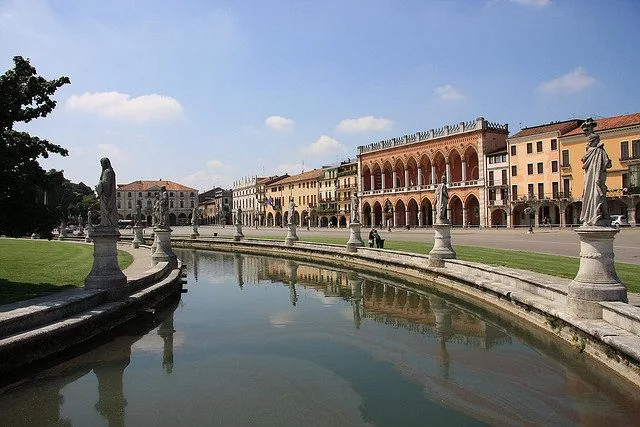 Best-rated walk
Padua City 2.5-Hour Walking Tour
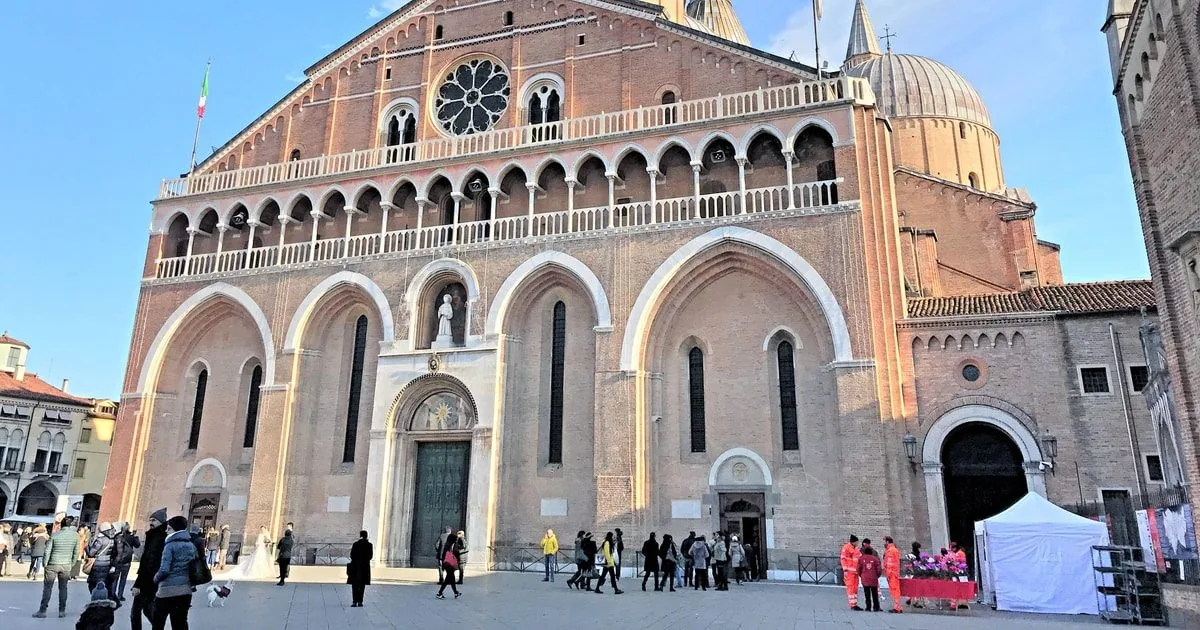 Basilica of St Anthony
Padua: St Anthony's Life Tour with Self-Guided Camposampiero Visit
 From Venice
From Venice: Full-Day Tour of Padua with Lunch and the Scrovegni Chapel
Also: what the chapel ticket already covers, which day to choose, and all thirteen listings compared.
Frequently asked questions
What is there to see in Padua in one day?
Start with what the chapel ticket already covers — the Eremitani Museum and Palazzo Zuckermann, on any day but Monday — then walk to the Palazzo della Ragione and the market squares, the university of 1222, the Basilica of St Anthony and Prato della Valle. All of it is flat, close together and largely under arcades.
What is Padova famous for?
Three things, and they are unrelated to each other: Giotto’s frescoes in the Scrovegni Chapel, the tomb of St Anthony in the Basilica, and a university founded in 1222 whose chair of mathematics Galileo held from 1592 to 1610. The city’s fourteenth-century fresco cycles — eight complexes, not just the chapel — were inscribed by UNESCO in 2021.
Is Padua a walkable city?
Unusually so. The centre is flat, the distances between the chapel, the market squares, the university, the Basilica and Prato della Valle are all short, and a large part of the route is arcaded, which matters in August and in the rain.
Is St Anthony buried in Padua?
Yes. The bones of St Anthony rest in a chapel inside the Basilica of St Anthony, ornamented in carved marble, and the Basilica is a working pilgrimage church roughly twenty minutes’ walk south of the Scrovegni Chapel — our own timing, not a published one. Entry is free.
Can I see Padua and the Scrovegni Chapel in a day from Venice?
Yes, if the chapel is booked before you travel. Padua is about 40 km from Venice and fast trains take around half an hour. What does not work is arriving and hoping: the operator does not sell chapel tickets for the same day. How to reserve a slot.